WordPress Revision Tracking: Built-in Features for Content Recovery
Written by Theo Zimmermann · Jul 27, 2026
WordPress Revision Tracking: Built-in Features for Content Recovery
WordPress stores multiple versions of posts and pages through its native revision system which activates automatically during editing sessions, and this mechanism allows users to review prior states without external plugins or manual backups. The feature captures changes at regular intervals while distinguishing between autosaves and committed revisions, so editors can trace modifications across collaborative workflows.
Mechanics of Automatic Revision Storage
Every sixty seconds the editor creates a temporary autosave that remains available until the next manual publish or update occurs, whereas permanent revisions accumulate each time someone saves a draft or publishes an update. Observers note that WordPress limits the number of stored revisions by default in recent releases, yet site administrators can adjust this threshold through the wp-config.php file or database settings to retain more historical versions when project requirements demand it.
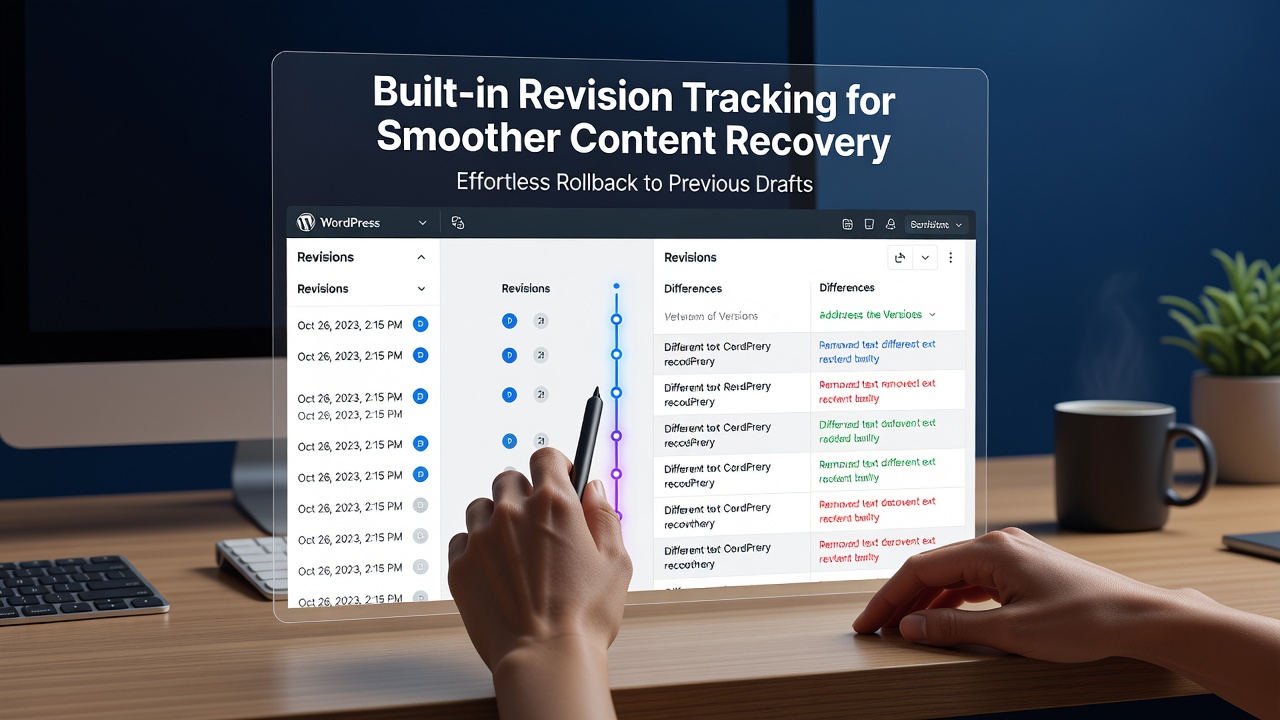
Data from WordPress documentation indicates that revisions include the full post content, title, excerpt, and custom fields at the moment of each save, which enables precise comparisons between any two selected versions through the built-in diff viewer. Researchers discovered that this comparison tool highlights additions, deletions, and modifications with color coding so users can identify exactly which sections changed between timestamps.
Accessing and Comparing Revision History
Users reach the revision history by clicking the revisions count link located beneath the publish meta box in the classic editor or within the document settings sidebar in the block editor, and once opened the interface displays a slider or list that lets editors scrub through the timeline. Those who've studied this know the system also records the author responsible for each revision along with the exact date and time, which supports accountability in multi-author environments.
One study revealed that teams working on long-form content often rely on this timeline to revert specific paragraphs rather than entire posts, since the compare view isolates changes at a granular level while preserving surrounding text intact. As of July 2026, WordPress core continues to refine the block editor's revision panel with improved mobile responsiveness and keyboard navigation, although the fundamental storage architecture remains unchanged from earlier iterations.
Restoring Previous Versions and Recovery Scenarios
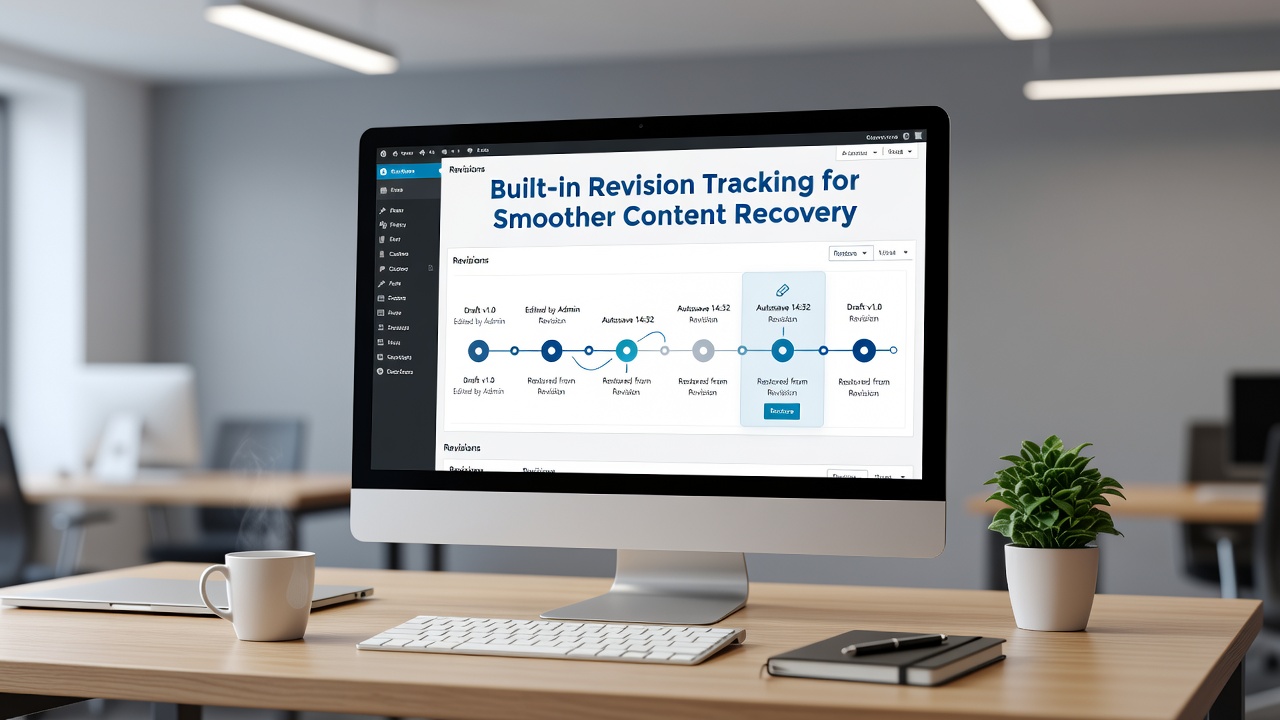
Restoration happens with a single click on the restore button for any selected revision, which instantly overwrites the current editor state with the chosen version while still creating a new revision of the prior state to maintain the full chain. This approach prevents accidental data loss during recovery operations and keeps the history continuous for future reference.
Take one researcher who noticed that accidental deletions during bulk edits could be reversed within minutes by selecting the last known good revision, and similar recovery patterns appear across educational institutions and corporate sites that publish frequent updates. Evidence suggests the system handles media attachments and featured images separately from textual revisions, so users must verify those elements after restoration if the original edit involved gallery or embed changes.
Configuration Options and Performance Considerations
Administrators control revision behavior by defining constants such as WP_POST_REVISIONS in the configuration file, where setting the value to false disables revisions entirely while an integer limits the stored count to reduce database size. Figures reveal that high-traffic sites with thousands of posts often implement such limits to maintain query performance, yet smaller blogs frequently leave the default unlimited setting active because storage overhead remains negligible.
According to reports from the Australian Institute of Digital Technology, organizations managing multilingual content benefit from revisions because translation updates create separate version trails that editors can audit independently. The reality is that plugin conflicts occasionally interfere with revision saving, so developers recommend testing major updates in staging environments before deployment to production.
Conclusion
WordPress revision tracking operates as a core component that supports content integrity across diverse publishing workflows, and its automatic nature means most users benefit without additional setup. Site owners who understand the available configuration options and comparison tools can leverage the system more effectively for collaborative editing and rapid recovery when needed.