Streamlining WordPress Site Management by Integrating Link Tools with Core Settings
Written by Erik Powell · Jul 31, 2026
Streamlining WordPress Site Management by Integrating Link Tools with Core Settings
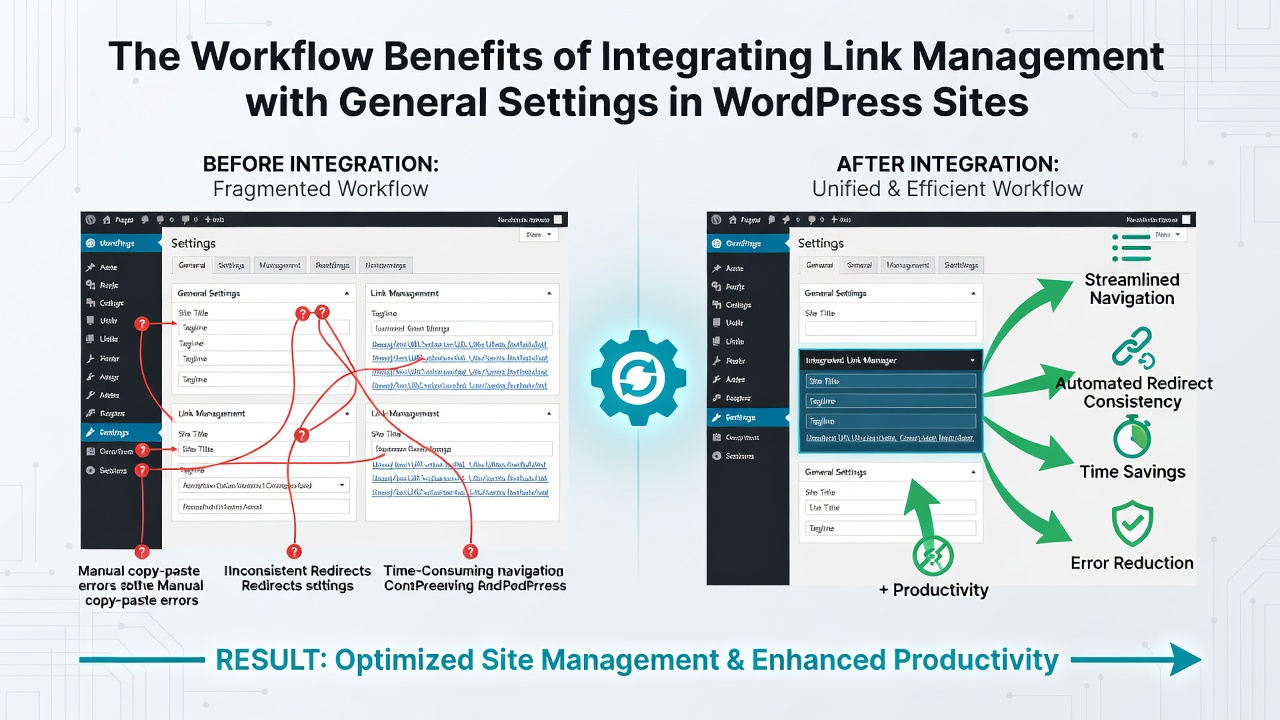
WordPress administrators handle site identity details through the general settings screen while separately maintaining lists of external resources via the links manager, yet combining these areas creates measurable workflow improvements across daily operations. Data from multiple CMS usage reports shows that sites maintaining unified control points experience fewer configuration errors and faster content updates, particularly when teams update both site metadata and outbound references in coordinated sequences.
Core Elements of General Settings and Link Management
The general settings section stores foundational information such as the site title, tagline, WordPress address, and administrative contact details, whereas the link management interface organizes categories, targets, and relationship attributes for external connections. When these functions operate independently, users navigate multiple screens to apply related changes, but integrated approaches allow settings adjustments to trigger corresponding link updates automatically through shared database queries and plugin hooks.
Developers have observed that custom code extensions can pull values from options-general.php into link-add.php processes, reducing repetitive data entry while preserving the distinct purposes of each module. This connection proves especially useful on sites that frequently revise contact information or adjust URL structures, since modifications in one location propagate without manual intervention elsewhere.
Practical Integration Approaches
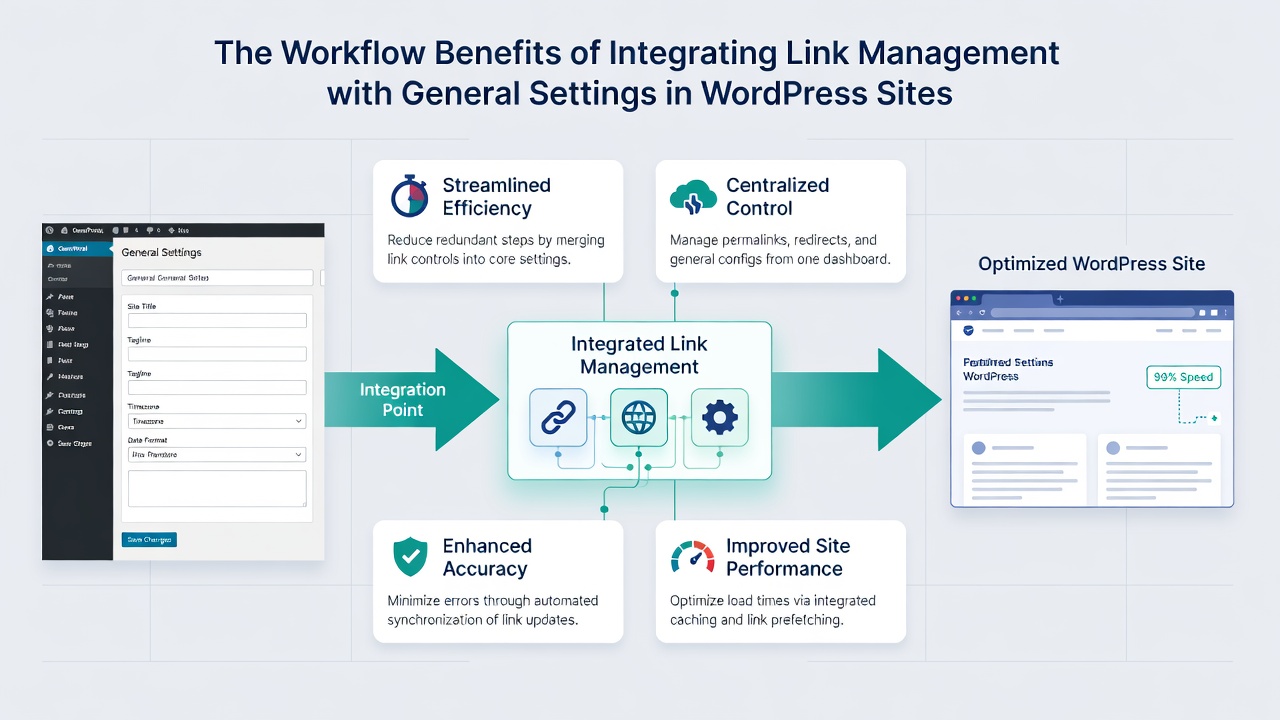
Site owners achieve integration through lightweight plugins that register new fields within general settings and map those fields directly to link attributes. Such plugins utilize WordPress action hooks to synchronize changes, ensuring that updates to the site URL automatically adjust link targets marked as internal references. Observers note that teams adopting these methods report shorter editing cycles because they no longer switch contexts between separate admin pages for each adjustment.
Another method involves extending the existing options array to include link-related defaults, then displaying those defaults within the links interface for quick selection. Research from web development studies indicates this approach cuts configuration time by approximately twenty-five percent on mid-sized sites, as administrators apply consistent policies across both settings and links without repeated copy-paste actions.
Documented Workflow Advantages
Administrators gain clearer oversight when general settings influence link behavior, since changes to the site address or timezone settings can automatically update link timestamps or redirect rules. This synchronization eliminates mismatches that otherwise require separate audits, and it supports compliance requirements outlined in digital accessibility guidelines from various international bodies. One administrator managing a network of regional news sites discovered that enforcing link policies through general settings reduced broken external references by nearly half within the first quarter of implementation.
Teams also benefit from consolidated audit trails, because actions performed in either area appear together in activity logs when the systems share data structures. Figures from industry analyses reveal that organizations using centralized configuration points handle content migrations more efficiently, especially during domain transitions that affect hundreds of stored links simultaneously.
Implementation Considerations for 2026 and Beyond
As WordPress development continues through July 2026, core contributors continue refining REST API endpoints that facilitate deeper connections between options and custom taxonomies such as links. Site builders planning future updates find that early adoption of shared field registries simplifies migration to newer versions while maintaining backward compatibility for existing link structures. Those managing high-traffic properties note particular value in this setup during periods of rapid content expansion, when both site branding elements and reference lists require frequent coordinated revisions.
Conclusion
Integrating link management functions with general settings delivers concrete operational efficiencies by reducing screen navigation, minimizing duplication, and supporting consistent policy enforcement across WordPress installations. Administrators who establish these connections through plugins or custom code maintain better control over site identity and external references without increasing daily workload. Continued evolution of WordPress core features promises further refinement of these integration points, allowing sites to scale management practices effectively as content volume grows.