Ripple Effects of WordPress Writing Configurations on Revision Workflows
Written by Theo Zimmermann · Aug 12, 2026
Ripple Effects of WordPress Writing Configurations on Revision Workflows
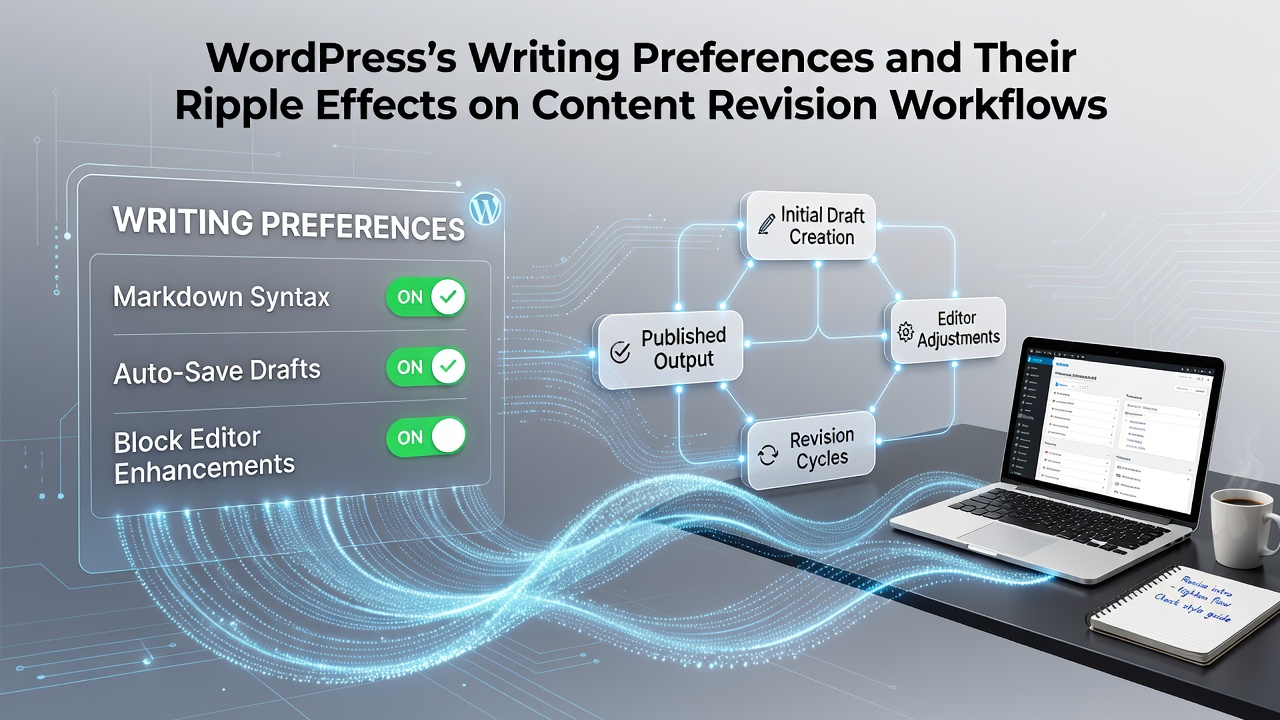
WordPress writing preferences control several aspects of content creation including default post categories, post formats, and email posting setups, and these choices shape how revision histories develop during ongoing edits. Observers note that when a site sets a default category for new posts, every subsequent revision carries that classification forward, which streamlines filtering in revision lists yet can create extra cleanup steps if teams later reassign categories across multiple drafts. Researchers have observed similar patterns in multi-author environments where consistent defaults reduce accidental mis-categorization during rapid editing cycles.
Default Categories and Their Influence on Revision Tracking
Teams that rely on a single default category often find revision interfaces display more uniform entries, since each saved version inherits the same tag structure from the initial creation point. Data from content management studies shows this consistency helps when searching through older revisions, because filters applied at the category level pull related drafts together without extra manual sorting. Yet changes to the default category midway through a project require bulk updates that themselves generate new revisions, adding layers to the history timeline that administrators must then review.
Post Formats and Version Control Interactions
Post format selections made in writing preferences affect how revisions store metadata, particularly when switching between standard, image, or quote formats during editing sessions. Experts have documented cases where format shifts trigger additional revision entries because the system records both content changes and format metadata updates in the same save action. This behavior becomes noticeable in August 2026 as newer WordPress releases refine how format data appears in the revision comparison screen, allowing clearer side-by-side views without separate database queries.
Post via Email Settings and Workflow Expansion
Enabling post via email creates an entry point that bypasses the standard editor, and any content arriving through this channel immediately enters the revision system once published or saved as a draft. Analysts point out that email-originated posts often require more initial revisions to match site style guidelines, because the imported text lacks the formatting controls present in the visual editor. Consequently, revision counts rise quickly on these posts, and teams monitor the revision limit settings more closely to avoid performance impacts from lengthy histories.
Revision Limits and Preference Overlaps
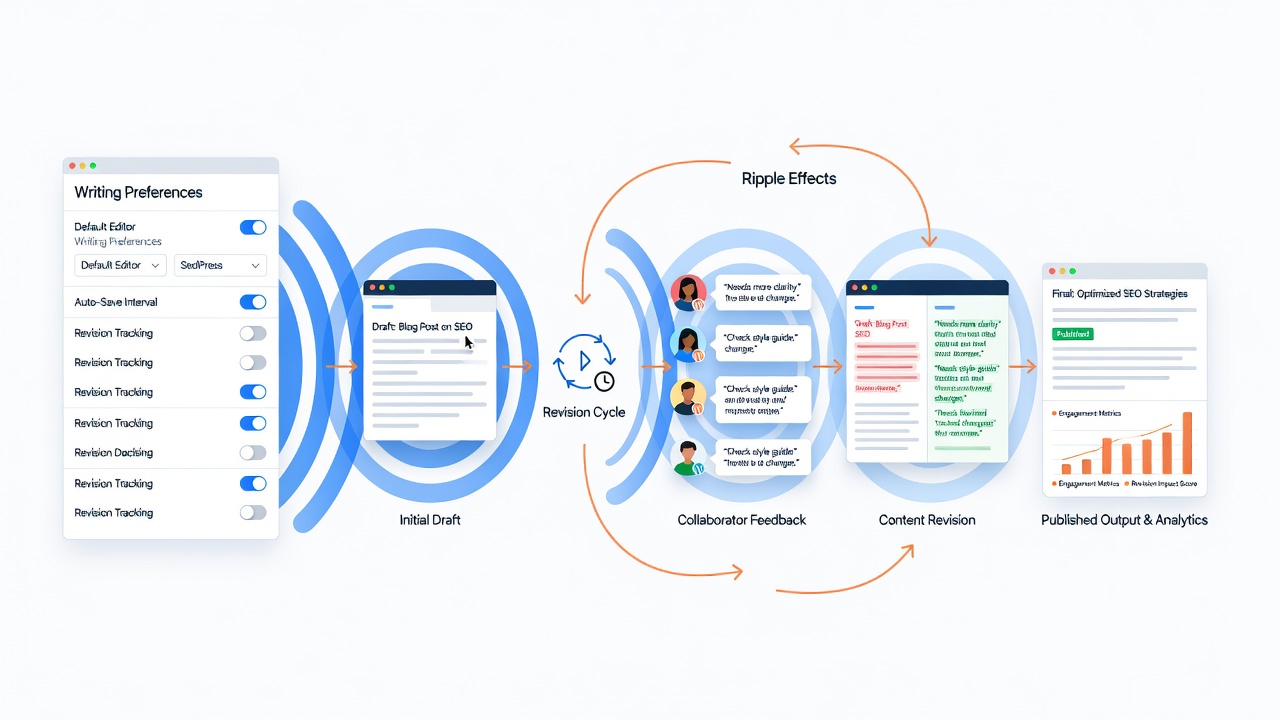
WordPress stores a configurable number of revisions per post, and writing preferences indirectly influence this number by determining how often new drafts are created through default behaviors. When default formats or categories prompt frequent saves, the revision stack fills faster, prompting administrators to adjust the WP_POST_REVISIONS constant in configuration files. Studies from research institutions in Canada indicate that sites with high-volume publishing schedules benefit from tighter revision caps when combined with automated category assignment, because fewer stored versions reduce database load during peak editing periods.
Multi-User Environments and Preference Propagation
In sites with several contributors, writing preferences set at the network or site level determine the starting point for every new post, which then carries through each revision cycle. Observers note that mismatched user expectations around these defaults lead to extra revision steps when one editor corrects category or format choices made by another. Academic papers on collaborative content systems highlight that clear documentation of writing preferences reduces such friction, allowing revision comparisons to focus on substantive text changes rather than metadata corrections.
Integration with External Tools and Data Flows
Writing preferences also affect how third-party plugins and import tools interact with the revision system, since imported content adopts the same default values as manually created posts. According to reports from the Australian Digital Content Council, organizations using automated import routines paired with strict category defaults experience smoother revision audits because each imported item begins with predictable metadata. This predictability supports compliance checks when revision histories must demonstrate editorial oversight across large content libraries.
Conclusion
WordPress writing preferences establish foundational rules that extend into revision workflows through category inheritance, format metadata, and creation pathways such as email posting. Changes in these settings produce measurable effects on revision volume, searchability, and administrative overhead across different publishing scales. As platforms continue to evolve, administrators who align writing options with revision management practices maintain clearer edit histories and more efficient content oversight processes.