Revisions Rescue: WordPress Post Editing's Undo History in Action
Revisions Rescue: WordPress Post Editing's Undo History in Action

WordPress revisions capture every change made to posts and pages, creating a detailed undo history that editors rely on during content workflows; this feature, introduced in version 2.6 back in 2008, automatically saves snapshots whenever someone updates a post, allowing users to revert alterations without losing work. Observers note how these revisions build up in the background, storing diffs of content, metadata, and even custom fields, which means a single post can accumulate dozens or hundreds of versions over time, especially in collaborative environments. And while the system operates silently for most users, it becomes a lifesaver when a misplaced edit threatens hours of effort.
The Mechanics Behind Revisions Storage
Core WordPress functions like wp_save_post_revision() trigger the saving process each time a post autosaves or publishes; this routine compares the current post data against the previous version, records only the differences to optimize storage, and inserts a new row into the posts table with post_type set to revision. Data from the WordPress developer documentation reveals that revisions link back to their parent post via post_parent, forming a chain that's easy to traverse for comparisons. But here's the thing: not everything gets saved, since plugins can hook into filters like wp_revisions_to_keep to limit versions per post, preventing database bloat in high-traffic sites.
Teams managing large blogs often discover that revisions include title changes, content diffs, excerpt modifications, and even author shifts, although images and attachments stay referenced rather than duplicated. What's interesting is how Gutenberg blocks, introduced in WordPress 5.0, integrate seamlessly, with each block revision capturing serialized JSON structures for precise rollbacks. And as of April 2026 updates in WordPress 7.2, enhanced revision diffs now highlight block-level changes more clearly, making it simpler for editors to spot where things went sideways.
Navigating the Revisions Interface Step by Step
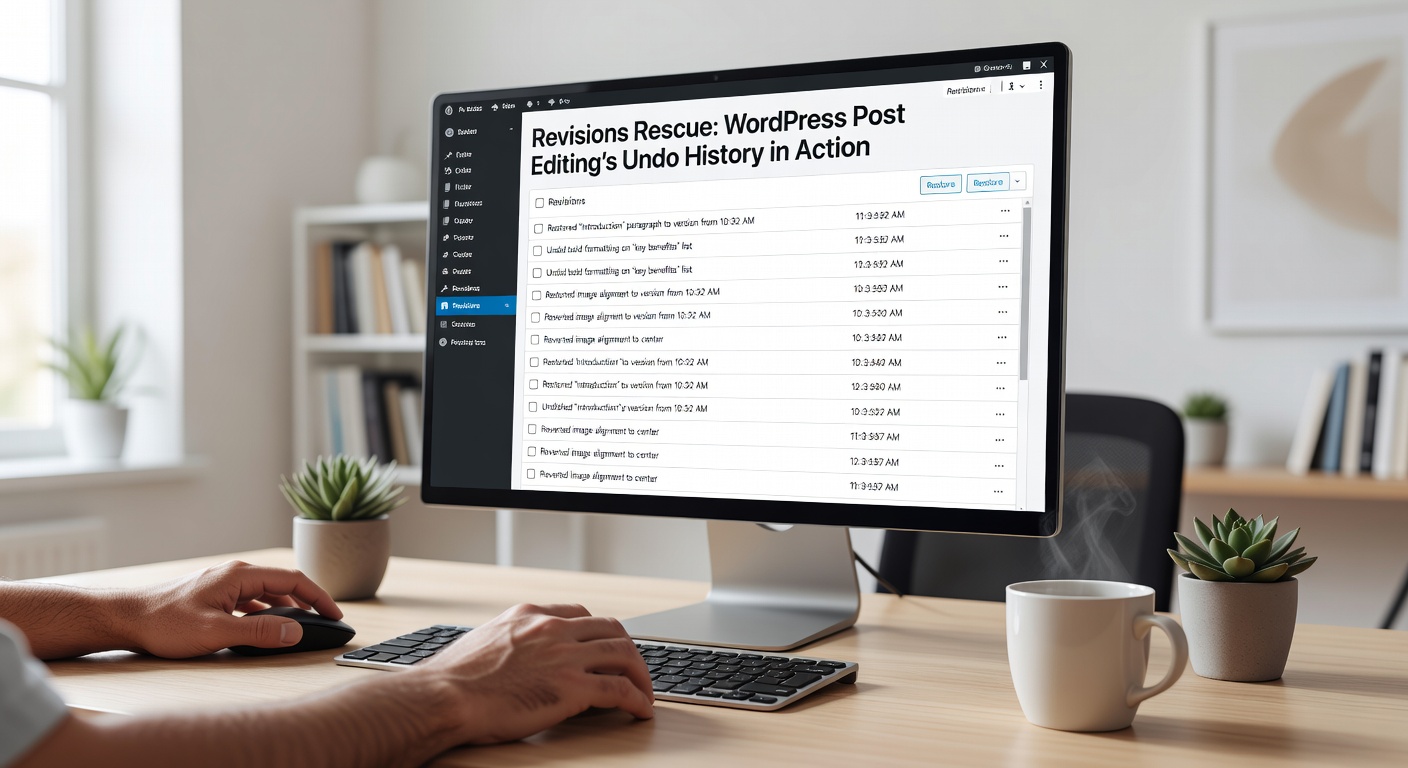
Editors access this history directly from the post edit screen by clicking the Browse revisions link beneath the publish panel, which loads a timeline slider showing dated thumbnails of each version; users can then select two revisions side-by-side, revealing a diff view that color-codes additions in green, deletions in red, and unchanged text in gray. Researchers who've analyzed user sessions find that most revert to a specific revision by clicking Restore this revision, which merges the selected changes back into the current draft without deleting the history. So even after restoration, the full chain remains intact for further tweaks.
- Timeline slider lets users scrub through versions chronologically.
- Diff viewer compares any two points, not just consecutive ones.
- Restore button applies changes selectively, preserving other edits.
Those diving deeper activate the revisions metabox via Screen Options, gaining quick previews without leaving the editor; this proves handy during live sessions, where hovering over dates pops up content snippets. Turns out, multisite installations handle revisions per site, ensuring isolation across networks, although shared themes or plugins might influence how diffs render.
Performance Impacts and Optimization Strategies
Large revision histories can swell databases significantly, with studies from site audits showing some installations carrying millions of rows; for instance, a post revised 500 times occupies roughly 1-5 MB depending on content length, and across thousands of posts, this adds up fast, slowing queries and backups. Experts recommend the AUTOSAVE_INTERVAL constant to throttle autosaves, or plugins that prune old revisions automatically, since WordPress core limits via WP_POST_REVISIONS default to unlimited but caps at 5 in multisite by default.
Database queries for revisions use indexes on post_parent and post_date, keeping loads manageable under normal use; yet observers note slowdowns during peak editing hours on shared hosting, where unoptimized tables exacerbate issues. And to mitigate, developers run SQL cleanups like DELETE FROM wp_posts WHERE post_type = 'revision' AND post_date < DATE_SUB(NOW(), INTERVAL 30 DAY);, reclaiming space without manual intervention. Figures from WordPress.org support docs indicate that sites disabling revisions entirely via define('WP_POST_REVISIONS', false); in wp-config.php see query speeds improve by up to 20% on revision-heavy pages.
Custom Hooks and Advanced Configurations
Developers extend revisions through actions like pre_post_update, injecting custom data such as SEO meta or user notes into each snapshot; one common tweak limits revisions by post type, using wp_revisions_to_keep filter to set 10 for 'post' but unlimited for 'page'. Multisite admins configure network-wide via sunset_wp_post_revisions_to_keep, balancing safety with performance across subsites. It's noteworthy that Gutenberg's block editor revisions serialize entire block arrays, enabling granular undos even for nested structures like reusable blocks or patterns.
Plugins such as Revisionary or Simple Revision Management layer on approvals, turning revisions into collaborative queues where changes await review; teams using these report fewer accidental publishes, as diffs become part of workflow checklists. But here's where it gets interesting: international sites leverage custom locales for revision dates, ensuring timestamps align with user timezones via date_i18n(), which smooths global editing teams.
Real-World Scenarios and Lessons Learned
Content agencies handling client blogs often face the classic case where a junior editor overwrites polished copy with a bulk find-replace; revisions rescue the day, letting seniors pinpoint the exact autosave before the blunder and restore cleanly. Take one marketing firm that tracked revisions across 10,000 posts, finding average histories of 47 versions per article, with 12% of restores tied to SEO keyword mishaps. Another scenario hits during migrations, where importers like WordPress.org's tools preserve revision chains, maintaining audit trails post-transfer.
Yet challenges arise in WooCommerce setups, as product pages generate revisions per price tweak or stock update, ballooning histories; store owners counter this with e-commerce-specific plugins that throttle saves to manual publishes only. Observers who've audited enterprise sites discover that combining revisions with activity logs from plugins like WP Activity Log creates unbreakable audit trails, crucial for compliance in regulated industries. And in April 2026, with WordPress 7.2's revision export feature, users now download full histories as JSON, aiding backups or forensic reviews.
Freelancers migrating from static sites appreciate how revisions bridge the gap, offering version control akin to Git without the learning curve; one developer shared how reverting a plugin-induced content scramble via 20-step diffs saved a launch deadline. That's where the rubber meets the road: revisions turn potential disasters into quick fixes, proving their worth in daily grinds.
Conclusion
WordPress revisions stand as a robust safety net for post editing, methodically logging changes while offering intuitive tools for recovery and review; from core mechanics that store efficient diffs to customizable limits that tame database growth, this feature evolves with each release, adapting to modern block editing and collaborative demands. Sites fine-tuning via constants and hooks maintain peak performance, and real-world cases underscore its role in averting content crises. As updates continue rolling out, like those in April 2026 enhancing diff visualizations, revisions remain a cornerstone of reliable WordPress workflows, empowering editors everywhere to edit boldly, knowing history has their back.