Quiet Configurations: Enabling Peaceful Coexistence Between WordPress Plugins and Themes
Written by Erik Powell · Aug 24, 2026
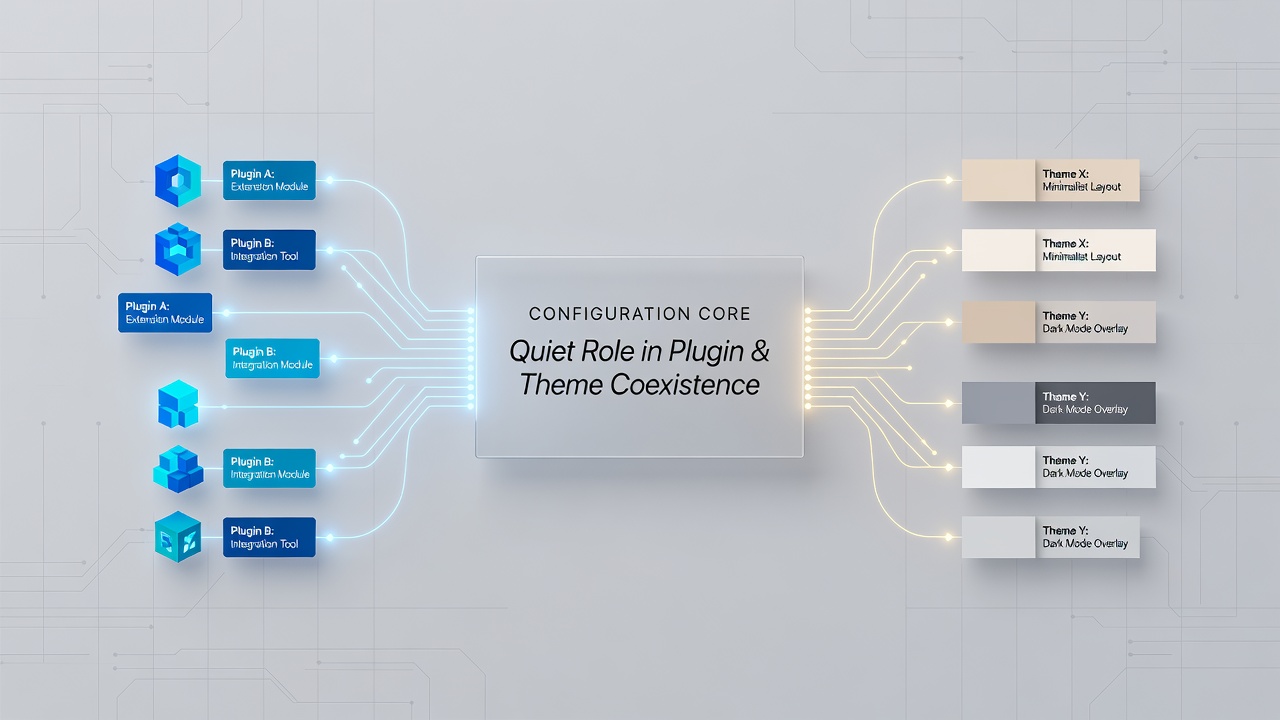
Quiet Configurations: Enabling Peaceful Coexistence Between WordPress Plugins and Themes
WordPress sites rely on layered configuration layers that quietly dictate how plugins and themes interact without stepping on each other, and those layers range from the wp-config.php file through database options tables to hook priorities that load order depends upon. Developers set constants and filters early in the bootstrap process, which means later-activated components inherit rules that prevent naming collisions or stylesheet overrides from breaking layouts. Research from open-source compatibility studies shows that sites using prefixed option keys experience fewer activation conflicts, while unprefixed settings often trigger silent failures that only surface after a theme switch.
Database Options and Prefix Strategies
Every plugin stores its settings in the wp_options table, yet conflicts arise when two extensions claim the same key without unique prefixes, and this pattern repeats across thousands of active installations according to figures from plugin repository analytics. Theme authors follow similar practices by checking for existing option groups before writing their own, which allows both components to read and write values without overwriting data that the other depends on. In August 2026, the upcoming WordPress core update is expected to introduce stricter validation around option registration, giving developers clearer signals when a name clash is about to occur.
Hook Priorities and Load Order
Action and filter hooks carry numeric priorities that determine execution sequence, so a plugin registering at priority 10 can run before a theme's function at priority 20 and thereby establish variables that the theme later consumes. Observers note that many coexistence issues trace back to missing or duplicated priorities rather than outright bugs, and adjusting those numbers often restores harmony without code rewrites. Those who study plugin ecosystems find that documentation of hook order reduces support tickets by measurable margins across both commercial and free offerings.
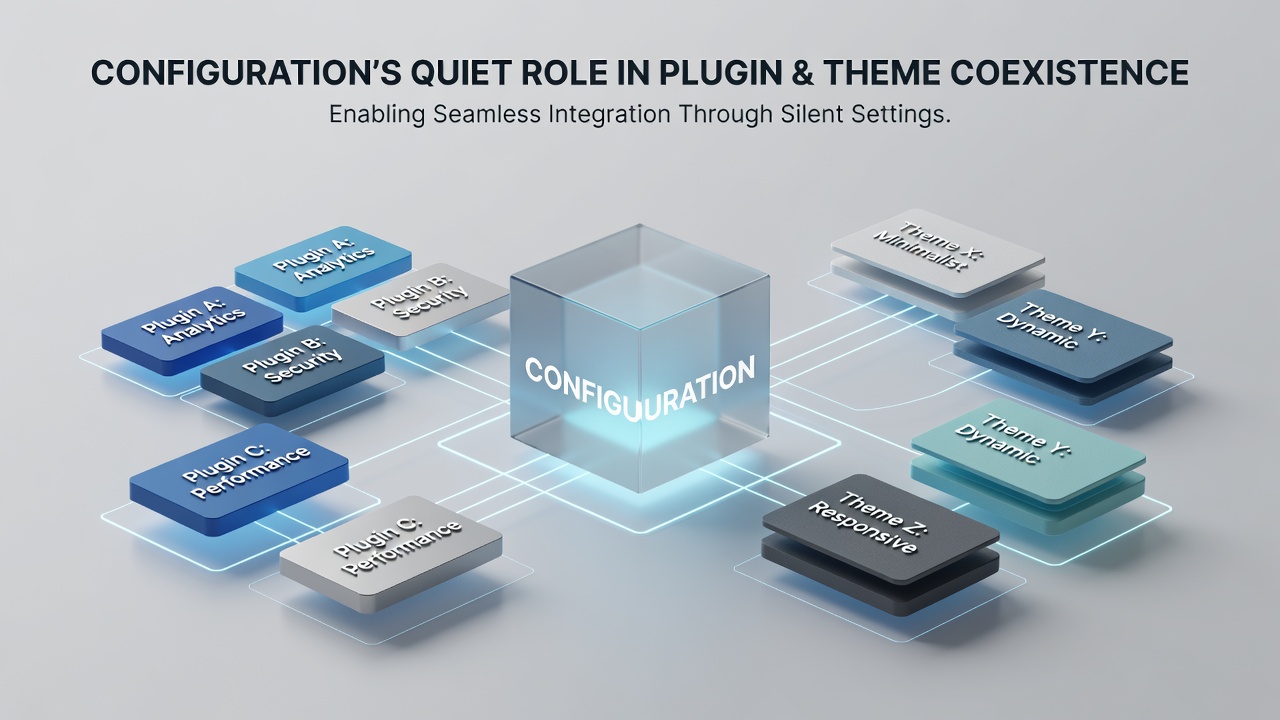
Constants defined in wp-config.php sit above the plugin and theme layers, locking values such as database credentials or debug states before any extension code executes, and this placement ensures that later components cannot accidentally alter foundational settings. When a constant is already defined, subsequent attempts to redefine it are ignored, which protects site stability during simultaneous activations. Industry reports from the National Institute of Standards and Technology highlight how early configuration locking reduces configuration drift in content management systems.
Stylesheet and Script Registration
The wp_enqueue_style and wp_enqueue_script functions accept handles that must remain unique, otherwise the last registered version overwrites earlier ones and breaks expected behavior. Plugin developers register assets with prefixed handles while themes do the same, yet both must also declare dependencies so WordPress loads jQuery or other libraries only once. Data from repository scans indicates that proper dependency declarations cut duplicate script loads by more than half on average across mixed plugin-theme environments.
Conditional Checks and Compatibility Layers
Well-written extensions include function_exists or class_exists checks before declaring their own versions of common utilities, and these guards allow a theme and plugin to share helper functions without fatal redeclaration errors. Researchers at several European digital innovation centers have documented that adding such checks during initial development prevents most coexistence failures that appear after updates. Site administrators who activate multiple extensions at once benefit when each component tests for the presence of required helpers rather than assuming sole ownership.
Theme customizer settings and plugin option pages sometimes overlap in the admin menu, yet careful use of capability checks and menu slugs keeps interfaces separate. When two components attempt to claim the same admin page slug, WordPress displays only the first registered item, which leaves the second invisible until the conflict is resolved through renaming.
Conclusion
Configuration choices made at the constant, option, hook, and asset layers collectively determine whether plugins and themes share a WordPress installation smoothly or generate repeated friction. Site owners who audit prefixes, priorities, and existence checks during setup reduce the chance of future clashes, and upcoming core changes planned for August 2026 aim to surface these issues earlier in the activation workflow. Those patterns continue to shape everyday site management across the platform.