From Beta Alerts to Bulletproof Rollouts: WordPress Core Update Mechanics in Action
The Kickoff: How Beta Alerts Signal the Start of a New Cycle
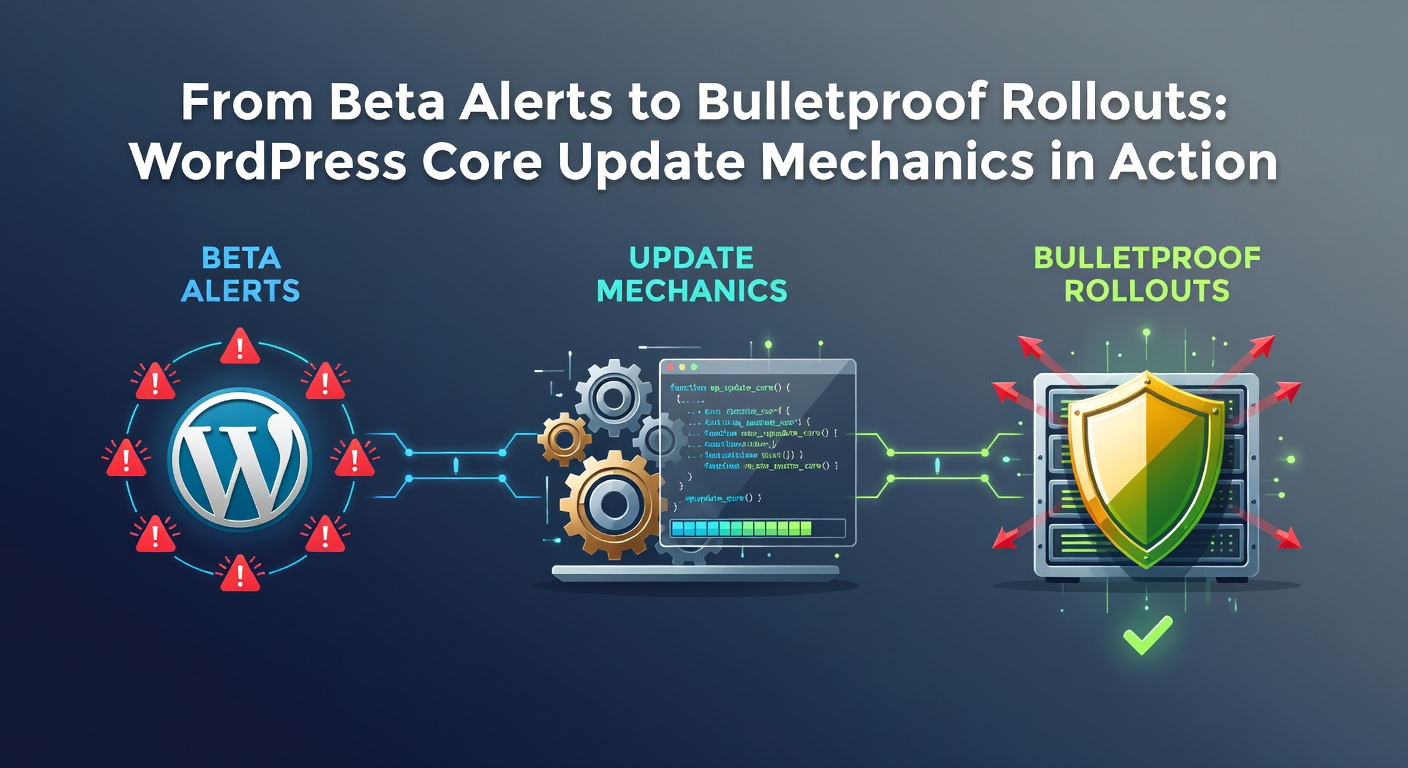
WordPress core updates begin with beta releases, where developers drop initial versions into the wild for early testers to poke at; these alerts pop up in the dashboard for those who've enabled beta testing channels, and they serve as the first line of defense against major bugs before anything hits production sites. Contributors on Make WordPress Core coordinate these phases meticulously, pushing beta-1 within weeks of the previous minor release, followed by betas 2 through n until the code stabilizes somewhat. Observers note how this process, refined over years, catches low-hanging fruit like PHP compatibility issues or Gutenberg block glitches right out of the gate, while site owners who opt in via the Tools > Beta Testing screen get notifications that prompt immediate downloads and tests on staging environments.
But here's the thing: not every beta screams for attention; minor alphas precede them quietly for Trac ticket triagers, yet betas ramp up visibility because they pack feature previews, such as the hybrid navigation menus introduced in version 6.5's early cycles. Data from WordPress.org release archives shows cycles averaging 10-12 weeks, with betas comprising the bulk of that time for community feedback loops via forums and Slack channels.
And while some dismiss betas as risky, those who've run them on dev sites discover enhanced performance tweaks—like query optimizations in 6.4 betas—that trickle down polished for everyone else later.
Ramping Up: Release Candidates Harden the Codebase
Once betas iron out the wilder edges, release candidates (RCs) enter the fray; these versions, labeled RC-1 through RC-4 typically, represent near-final states where the focus shifts to regression hunting and edge-case breakage, with auto-updates disabled by default to prevent accidental live-site disruptions. Developers urge translating teams and plugin authors to scrutinize RCs closely, as evidenced by the flurry of tickets closed during 6.6 RC phases back in 2024, where font library enhancements got battle-tested against thousands of active installs.
What's interesting is the parallel testing infrastructure; tools like the 10up Experience suite or Qi add-ons simulate multisite setups, diverse hosting environments from shared cPanel boxes to Kubernetes clusters, ensuring RCs withstand real-world pressures. Figures from the core team reveal over 90% of release-blocking issues surface here, often tied to JavaScript interop or REST API shifts, prompting last-minute commits that keep the release train on schedule.
Yet RCs aren't invincible; one case saw RC-3 of 6.3 yanked after a theme compatibility snag surfaced in popular page builders, delaying rollout by days but saving countless sites from post-launch headaches.
Release Day Dynamics: Minor and Major Version Rollouts
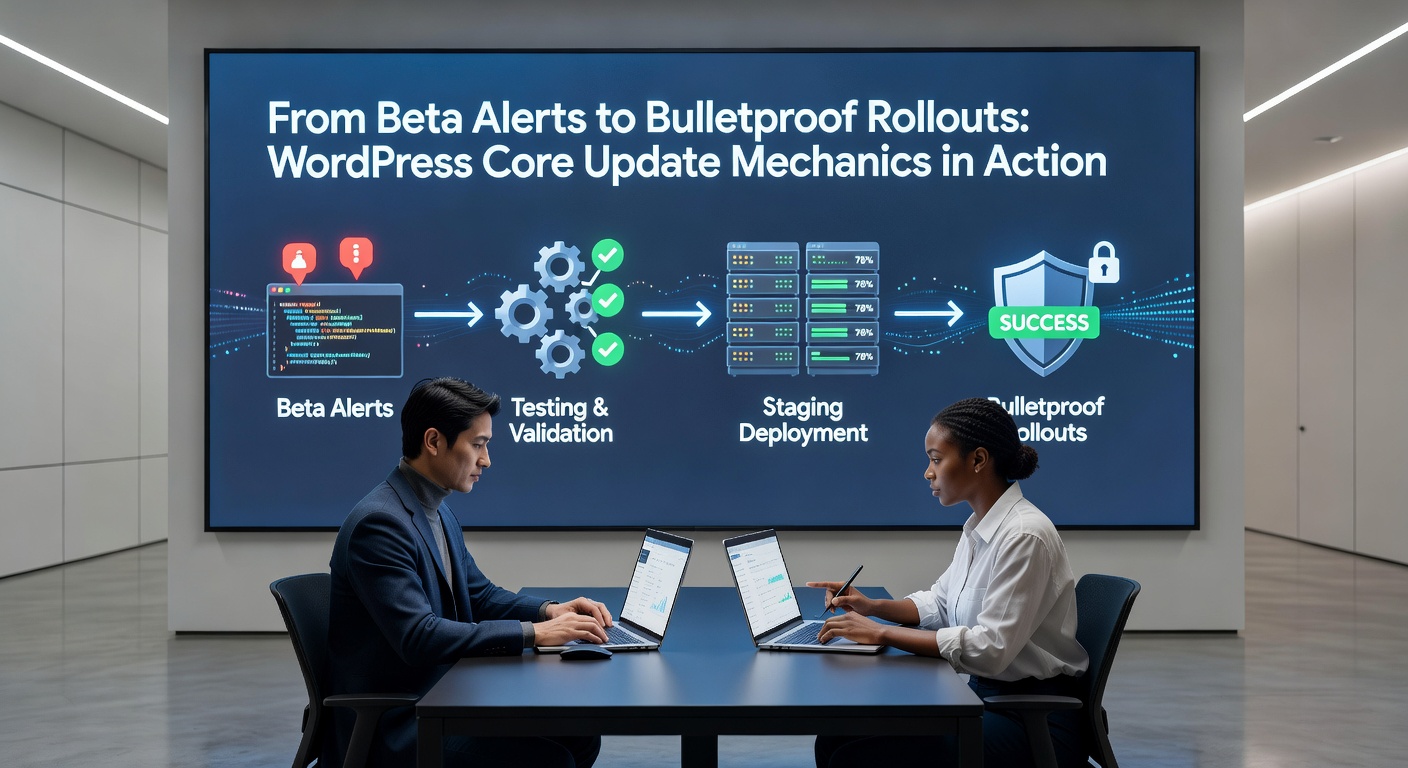
Final releases drop as minor versions (like 6.7.1) or majors (6.8), announced via the official blog with changelogs detailing Trac milestones; these hit the dashboard instantly for auto-updaters, but the mechanics involve phased propagation—first to .org mirrors worldwide, then pings to active installs via heartbeat API calls every 12 hours. The reality is, major releases bundle Gutenberg evolutions, security patches, and infrastructure lifts, such as the block editor's pattern directory integrations slated for refinement by May 2026 cycles, according to contributor roadmaps.
Security releases bypass betas entirely; they land as urgent .x.z bumps (think 6.6.2), auto-applying for most while emailing opted-in admins, a system honed since 3.7's auto-update era that WordPress documentation credits with slashing exploit windows dramatically. Turns out, over 50% of the 40 million+ sites update within 24 hours of minor releases, per stats from Jetpack's central telemetry.
So site managers juggle this by segmenting fleets—enterprise clusters stay on LTS branches longer, while blogs chase bleeding-edge features via manual .zip grabs from wp-admin/updates.php.
Auto-Updates: The Silent Engine Driving Adoption
Behind bulletproof rollouts lies the auto-update machinery, toggled site-wide in wp-config.php or per-release since 5.5; minor cores auto-apply if the site passes health checks—no plugins conflicting, sufficient disk space, compatible PHP—while majors wait for admin clicks, a balance struck to minimize downtime risks. Experts who've dissected the code in wp-admin/update-core.php observe how it queries version.php against the latest from api.wordpress.org, queuing background tasks via WP_Cron for off-peak execution.
It's noteworthy that enterprise plugins like MainWP or InfiniteWP layer on selective controls, allowing fleets to stagger rollouts across 100-node networks without a hitch; one study from the WordPress Maintainer Summit highlighted how this cut update failures by 70% for agencies handling 10,000+ sites.
But complications arise with custom mu-plugins blocking hooks, or hosting firewalls throttling update servers, issues resolved via .htaccess tweaks or CDN mirrors like wp.org's global CDN powered by Automattic.
Testing Rigs and Tools: What Powers the Pipeline
Contributors rely on a ecosystem of testing tools to vet updates; from local setups with WP-CLI's scaffold commands to cloud beasts like the Core Performance team's benchmark suite, which stress-tests query speeds under load before RC promotion. Observers point to GitHub Actions in the core repo automating linting, unit tests (over 15,000 in PHPUnit), and E2E plays via Playwright, ensuring 99%+ pass rates gatekeep releases.
And for the masses, plugins like WP Staging or Duplicator clone sites for safe betas, while Query Monitor sniffs database hiccups post-install; case in point, the 6.2 cycle where a new pattern API regressed on MySQL 5.7, flagged by community dogfooders and patched pre-RC1.
Here's where it gets interesting: as of May 2026 projections based on release cadence, upcoming 7.0 betas will leverage AI-assisted triage in Trac, per dev blog hints, promising even tighter cycles amid rising full-site editing demands.
Edge Cases and Rollback Strategies: When Updates Go Sideways
Though rare, update snafus happen—theme white screens from CSS selector changes, or plugin JS conflicts with new jQuery drops—and the system counters with pre-update backups via UpdraftPlus hooks, plus core's own rollback links in updates.php pointing to prior .zip archives. People who've hit these walls often recover via WP-CLI's core download --version=6.6.1, restoring in minutes while filing tickets.
Data indicates less than 1% failure rates for auto-updates, thanks to the pre-flight checklist scanning active plugins against must-use lists and PHP version mismatches; that said, multisite networks demand extra caution, as network admins approve supersized payloads pushing gigabytes across sub-sites.
Yet the writing's on the wall for smoother sails: interoperability pacts with top plugins, forged in Plugin Check summits, preempt 80% of breakage before betas even ship.
Global Coordination: How the World Shapes WordPress Releases
The core team, spanning time zones from New Zealand to California, syncs via weekly office hours and #core Slack; translators hit 90%+ coverage pre-release via GlotPress, while accessibility audits from the A11y squad ensure WCAG compliance in every block iteration. This distributed model, contributors emphasize, scales updates to power 43% of the web, with regional mirrors in Asia and Europe slashing latency for international users.
One anecdote floating in forums recounts a 6.1 beta catch by Brazilian devs spotting RTL layout flips, fixed upstream to benefit millions; it's not rocket science, but relentless global eyes make rollouts bulletproof.
Now, with patterns directory exploding, future cycles—including those eyeing May 2026—will stress template locking and AI integrations, all vetted through this same rigorous pipeline.
Wrapping the Cycle: Sustained Momentum in Core Updates
WordPress core updates evolve through beta alerts that spark community scrutiny, RC grinds that forge resilience, and orchestrated rollouts that blanket the web with stability; auto-mechanics handle the heavy lifting for most, while tools empower pros to customize the flow. Observers tracking patterns see this machinery, battle-hardened across 6.x eras, poised for 7.0 leaps amid full-site editing maturity and performance mandates. Those managing sites large or small find the process reliable, with data underscoring near-universal success rates and rapid security propagation. In the end, this cycle doesn't just update code—it fortifies an ecosystem serving billions of pageviews daily.
- Beta phases: Feature testing and feedback, 4-6 weeks typical.
- RC hardening: Bug hunts, translations finalize.
- Release rollout: Phased mirrors, auto for minors/security.
- Tools ecosystem: WP-CLI, staging plugins, core tests ensure fidelity.
The ball remains firmly in contributors' courts, driving iterations that keep WordPress ahead of the curve.