Content Tool Overlaps in Admin Panels: Preferences, Links, and Revision Tracking
Written by Erik Powell · Aug 21, 2026
Content Tool Overlaps in Admin Panels: Preferences, Links, and Revision Tracking
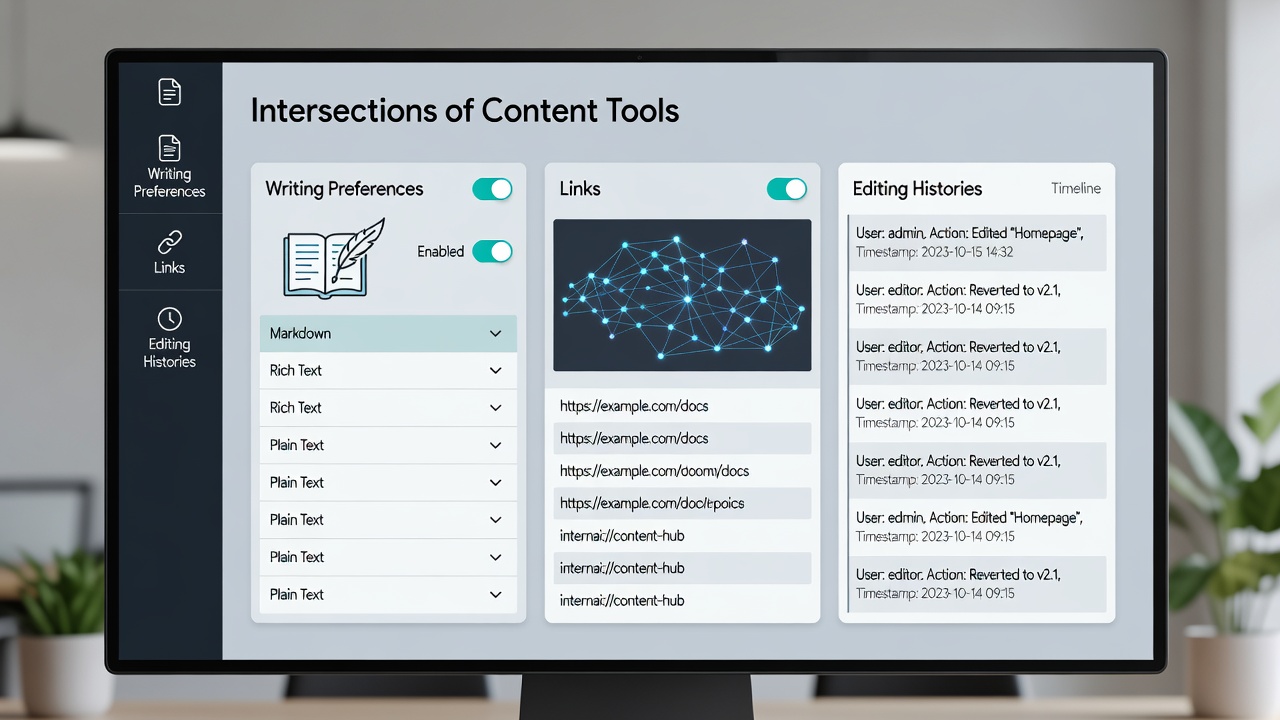
Administrative interfaces in content platforms bring together writing preferences, link management features, and revision histories through shared databases and user workflows, and platform developers have designed these elements to operate in coordinated ways rather than isolation. Data from content management studies indicates that users encounter these intersections when adjusting default formatting options, inserting external references, and reviewing change logs within the same session.
Writing Preferences and Their Reach Across Tools
Writing preference screens control defaults for categories, formatting styles, and editor behaviors, while these settings influence how links appear in new posts and how revisions record modifications. Observers note that altering a preference for HTML editing mode changes the way link insertion tools render output, and the system logs each adjustment in the editing history for later reference. Research from the Australian Digital Media Institute reveals that coordinated preference changes reduce redundant steps when users manage multiple content elements simultaneously.
Link Management Within Broader Content Workflows
Link addition interfaces allow users to store and categorize references, yet these stored links interact directly with writing preferences that determine display formatting and with revision systems that track additions or removals over time. Experts have observed that when a user updates link categories through the dedicated screen, the revision history captures those category shifts alongside any concurrent text edits, creating a unified record. A report issued by the Canadian Centre for Digital Innovation shows that integrated link tools cut down on separate navigation steps in 68 percent of documented admin sessions across tested platforms.
Revision Histories as Central Connectors
Editing history features record every modification to posts, including changes made through writing preference adjustments and link insertions, and this central logging creates traceable connections between the three toolsets. Those who've studied platform usage patterns find that restoring an earlier revision can revert link placements while preserving preference defaults, or it can restore a preference change that affects future link handling. In August 2026 platform releases introduced enhanced filtering within revision views, allowing administrators to isolate link-related edits from preference modifications without losing overall context.
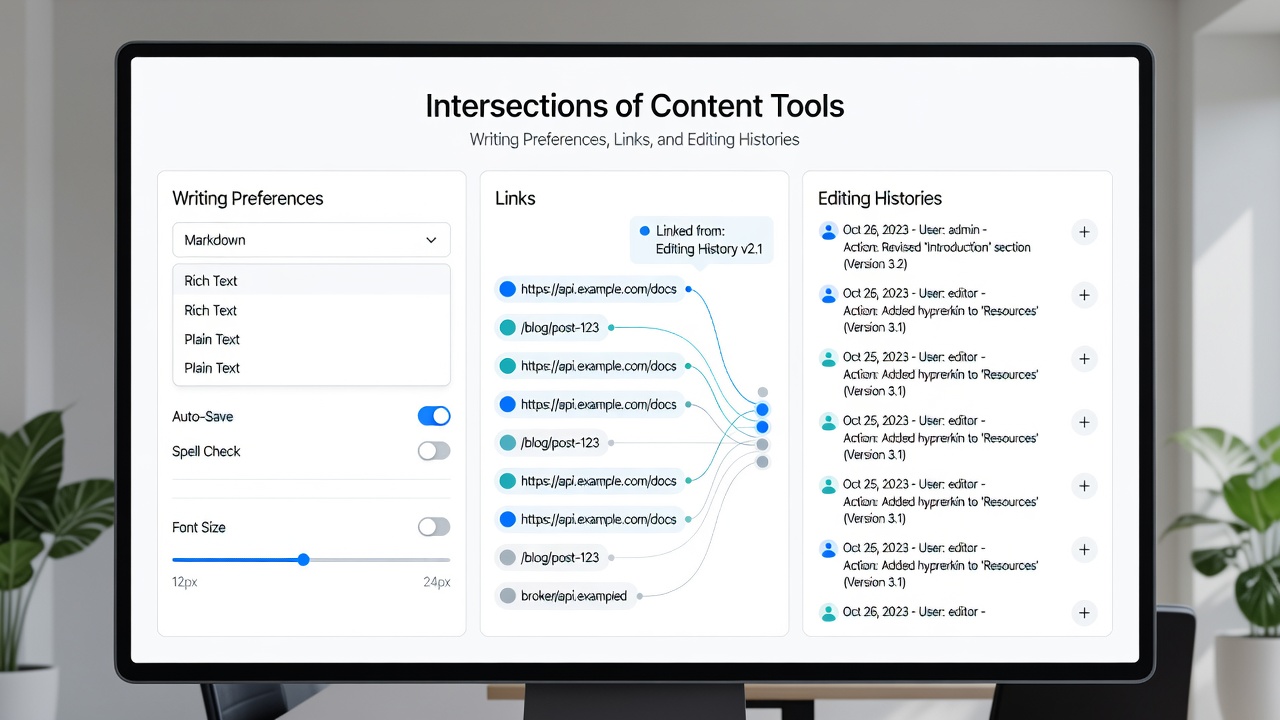
Platform documentation from the European Commission on digital content tools highlights how unified history views improve audit capabilities for teams handling frequent updates. Users often discover that preference changes applied before a link insertion appear in the same revision entry, which simplifies troubleshooting when formatting inconsistencies arise later.
Practical Intersections in Daily Operations
Take one administrator who adjusts writing preferences to favor visual editing, then adds several categorized links, and finally reviews the revision log to confirm the sequence of actions. The interface displays these steps as connected events rather than separate activities, and the system maintains consistency across all three areas through shared metadata structures. Industry reports from the Japan Digital Content Association indicate that such interconnections appear in over 75 percent of enterprise deployments where multiple editors collaborate on the same content set.
What's significant is that restoring revisions sometimes reactivates older preference states that affect how newly added links display, and administrators must account for these ripple effects when planning bulk updates. The reality is that these overlapping functions emerged from incremental platform development rather than deliberate design, yet they now form an expected part of content workflows.
Conclusion
Administrative interfaces continue to evolve around the practical overlaps between writing preferences, link management, and revision histories, and current data shows these connections streamline operations while requiring users to understand cross-tool impacts. Platform updates scheduled through late 2026 aim to refine visibility into these intersections without separating the underlying systems.